Words Are Very Unnecessary
Why we're not talking as much as we used to (and why that's a problem)

Words like violence
Break the silence
Come crashing in
Into my little world
Painful to me
Pierce right through me
Can't you understand?
Oh, my little girl
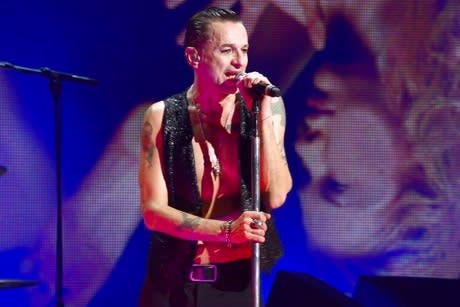
Enjoy the Silence by British new wave pioneers, Depeche Mode, is one of my top-ten tracks of all time. A stunning piece of post-industrial synth-pop with a great video, and a live version from Berlin that is breathtaking in both delivery and visuals.
The song has rightly racked up more than a billion Youtube views as well as a billion Spotify listens. Not bad for a song written before the advent of social media, and whose remaining members are now in their sixties.
The chorus goes on to explain (in the context of a relationship of course):
Words are very unnecessary
They can only do harm
Well that second line we often sadly affirm. We’ve been told it often. But a new psychological study has raised another, perhaps even deeper harm: We are talking less and less, and to less and less people. The first line, it turns out, is untrue. Words are very necessary! And turns out we’re saying a lot less of them.
Writing in response to this in The Atlantic, author and columnist, Olga Khazan, observes that we spoke on average, almost 5000 words less per day between 2005 and 2019. A drop each year of well over 300, per day! That’s around 11,900 words in 2019, compared with 16,632 in 2005.
And that’s before COVID isolated so many of us and turned a whole cohort of young people away from face to face conversations at all. Those numbers will be way down.
We can only surmise that in the seven years since, with the ramping up of technologies, and the fact that I can, via an app, order a meal for my family without actually saying more than “Thank you”, or “The chicken schnitzel goes there.”, we’re heading below the 10,000 range per day.
You see, as those two delicious words “chicken schnitzel” remind us, it’s not just the meaningful dialogues that we no longer have, it’s the little stuff. Which on the surface seems like it is insignificant (we do call it “small talk” after all), has an important effect on us.
But it turns out the chit-chat as we go about our day in the world, with those we barely know, has communal importance. Khazan reports:
Gillian Sandstrom, a psychologist at the University of Sussex and the author of Once Upon a Stranger, studies “weak ties,” or the people we talk with casually throughout the day. She has found that although these interactions might seem meaningless, they boost our sense of well-being, making us feel part of something bigger, even if we’re just buying milk or chatting with a colleague at the office coffee maker. And when we have fewer of these exchanges, we miss them:
The social intercourse of our lives that rounds off the edges of our spiky isolation is critical to the health of both us and our neighbours.
Meanwhile the growing isolation and work from home that many have settled into since COVID has also correlated with/caused(?) a plunge in our mental health. And it’s a self-reinforcing spiral. The less we talk to others, the less likely we are to talk to others in the future.
It’s a fascinating study, and I presume that as technology becomes more interactive, and as we approach even more immersive expressions of it, we will talk less and less to fewer and fewer people.
And of course, it’s also the case that not talking to others tends towards us dehumanising them. Hello social media!
One of the great strengths of the murdered activist and political leader, Charlie Kirk, was his deep desire to get people talking with other people, especially people they disagreed with.
If you watch his videos you can see how dehumanising some of the pushback towards him was. And you can, sadly, watch plenty of videos of people celebrating the silencing of his voice.
Face to face conversations brings empathy with it. Or at least it should. I do wonder of all the words we do actually say in a day, how many of them are “shouty” words. How many are simply slogans - personal protest marches in which we assert our rights over whoever we may have a problem with.
Our deep concern should be the dehumanising process that we are seeing in our world, in which people are reduced to slogans, or vilified by graffiti while never being spoken to face to face. Shouted at, yes. Spoken to, rarely.
There’s a real discipleship and evangelistic opportunity for the church in this space. If, as we see, there is a growing movement of younger people, especially the least talkative cohort of all - young men - coming to our churches, then we’re going to have to train them in conversation.
We’re going to have to equip a younger cohort not given to discussion, face to face disagreement, or even verbal social cohesion, to open their mouths and talk.
For older generations in the church who are used to the social chit-chat as well as the deeper dialogue, this may be a case of doing some version of divine accommodation.
As Calvin described the entrance of Jesus into the world courtesy of our speaking God who comes to us in his eternally first and eternally final Word, the Lord Jesus:
“For who even of slight intelligence does not understand that, as nurses commonly do with infants, God is wont in measure to ‘lisp’ in speaking to us? Thus such forms of speaking do not so much express clearly what God is like as accomodate the knowledge of him to our slight capacity. To do this he must descend far beneath his loftiness” (Calvin’s Institutes Book 1, Ch13, Section 1)
God descended far beneath his loftiness at ever increasing increments in the Old Testament before, as we know from Hebrews 1, he spoke to us in a Son.
Let’s bring this home to the church life and the community of God in which conversation and words are vital.
What might it mean to accommodate a whole generation of new church-goers who are unused to talking on a regular basis, don’t know how to strike up a conversation (especially with a fellow young person of the opposite sex), and certainly don’t know how to navigate a conflict verbally?
Like God is with us, we will have to be “receptor-oriented” to whole people groups who have grown up online, who are terrified at making an actual phone call, and who are constantly worried that they might sound silly, or be mocked, if they say the wrong thing at the wrong time.
What’s the alternative? Perhaps - gloomily - it’s the earthbound version of CS Lewis’s vision of Hell in The Great Divorce, in which people argue and fall out with one another in the “Grey Town”, and simply move further and further away from each other. Eventually they have silence, but they don’t enjoy it, they endure it.
The church will have to work hard to “lisp” to an unspeaking crowd for whom many words have been violence, and who may prefer silence simply because they don’t know how to communicate well.
Oh, and to finish on a upbeat note, I reckon if you put Sunday services into the mix, most Christians speak far more words in a day - and often to each other, and often through singing - than most other people do.
I do enjoy the occasional silence, but my great prayer is “Oh for a thousand tongues to sing/My great Redeemer’s praise.”
This is so good, thank you for putting this issue into... well, words! I don't think I'd ever thought clearly about it till now, but I can see how true it is for those young people I'm close to, and older people too. I feel pretty lucky to live in a small country town where a quick trip to the supermarket can take quite a while because of the conversations along the way. It feels like just doing things that were pretty normal like chatting, smiling at people, meeting up to share life and thoughts, creating original art, music, poetry, making handcrafted work, having people over to dinner - these are going to gain a lot of value, and shine like stars, in the new normal.