Well Our Feeble Frame He Knows
Why we should not change the lyrics of old hymns in this therapeutic age

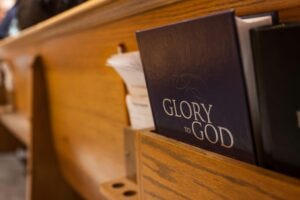
I stood up to sing a hymn at church on Sunday with a bit of a wince. I’ve had surgery on a damaged hamstring, I can’t run for ten weeks, and even though I’m back walking, standing for any length of time, or getting up out of a wooden pew after sitting for ten minutes is not all that pleasant. I felt creaky.
Oh and what does my leg look like? It looks a little like that. But it’s on the mend, and I am off crutches at least.

But enough about my torn hammy for the time being. This is about the hymn. If, like me, you grew up in a certain type of church in a certain type of era, you will know the rather isolating feeling of being prepared to belt out the lyrics of a familiar hymn with gusto, only to realise the words have changed.
Happens all the time these days. Some genius or genii - or perhaps even some genie - waved a magic wand over supposedly crusty old hymn lyrics and modernised them for the next generation. Or to put it another way, completely gutted them.
Now lest you think I’m just old and grumpy, I’m not just old and grumpy. I’m old and grumpy, and theologically astute. And on top of that pastorally aware. Proof of that is my Spotify list which is mainly made up of modern British Jazz Rap, such as Kofi Stone, Tom Misch, Loyle Carner etc, etc. Don’t know them? Look ‘em up, you’ll love it. Or hate it.
But back to church music. Not only does changing the lyrics risk severe embarrassment for bad singers such as myself, left hanging as we are when we warble out a now redundant lyric, what’s also happened is that deep, theological realities that inform the heart can be lost.
This is not the same as the 2010 trend of adding a bridge or something to the chorus, or even the end of the hymn to funky it up somewhat. No, this trend risks gutting the song.
As happened in church this past Sunday. Now I love our church service, it’s Anglican, the liturgy is deep and rich, the prayers are a mix of old and new, written and extemporary, and our rector preaches encouraging, biblically deep, and pastorally rich sermons on a regular basis, and does so with humility and deep insight into the congregation. There’s a true sense of God’s Holy Spirit at work among his people in the components of the service.
And mostly we sing songs I can sing. That are theologically well informed. And we often sing songs I know - both old and new. So this is a minor quibble, but an important one. Last Sunday we sang a hymn I’m familiar with, but alas, the genie had gotten out of the bottle and granted three wishes to the worship song editors back in the 2010s.
The hymn? Praise My Soul the King of Heaven, by Henry Francis Lyte. The first verse goes like this:
Praise, my soul, the King of heaven;
to his feet your tribute bring.
Ransomed, healed, restored, forgiven,
evermore his praises sing.
Alleluia, alleluia!
Praise the everlasting King!
Know it? No? Once again, blank stares mean you are young or you grew up in charismatic or pentecostal churches, or one of those funky evangelical ones with a Greek word for its name (also very 2010).
Not that there is anything wrong with that, the most “ear-wormy” song of all time for me was from the first time, hurt and feeling hopeless, I attended a pentecostal church and we sang “The Steadfast Love of the Lord Never Ceases” - straight outta Jeremiah. It’ll be a funeral song for me. I love it.
But back to Praise My Soul. It’s a cracker. Musically it’s easy to sing too, which is a great help for me - and for the congregation.
And as you age and gain experience in life, and make mistakes, you realise just how theologically and pastorally informed such hymns are. And how little the need changing. And how much it would be like trying to draw a better smile on the Mona Lisa once da Vinci had finished his masterpiece.
In other words, don’t change it, just sing it! And then if you have to help people understand it, then do that too! I mean, how many Ebenezer’s can we raise (let the reader understand)?
But I’m digressing here, and we’re getting to the end of the hymn. And it was the third verse in particular that jumped out at me, at least the changes did. Here’s the original:
Fatherlike he tends and spares us;
well our feeble frame he knows.
In his hand he gently bears us,
rescues us from all our foes.
Alleluia, alleluia!
Widely yet his mercy flows!
Yet when we sang it on Sunday, for some reason the second line had been changed to read ‘All our hopes and fears he knows”. Nothing wrong with that, per se, because it’s also true, but bear with me. It’s not enough!
When Henry Francis Lyte wrote what he did, he was on to something. And he was on to something because, like many posh boys of his day at the start of the 19th century his decision to enter holy orders was less about piety and more about probity. A good thing to do.
But he underwent a profound spiritual change after the death of another clergyman he knew. We read this from Lyte’s own hand about his fellow vicar:
He died happy under the belief that though he had deeply erred, there was One whose death and sufferings would atone for his delinquencies, and be accepted for all that he had incurred; I was greatly affected by the whole matter, and brought to look at life and its issue with a different eye than before; and I began to study my Bible, and preach in another manner than I had previously done.
That’s the gospel right there. The gospel for weak people. The gospel for people who will die. And that’s why it is important to sing “Well our feeble frame he knows.”
We, whose frames are feeble, and who, given both our sinful natures and their finite existences, find that our frames not only let us down spiritually, but also physically. And yet, in his infinite mercy and grace God knows our feeble frames. He is a Heavenly Father, after all.
Our Father created our feeble frame. Feeble in the sense that we fully depend on him for all of life and sustenance. But God also knows our feeble frame because in Christ he took on flesh. God well knows our feeble frame because as of now, Christ has a glorified version of what was once a feeble frame.
Now Christ’s frame was not enfeebled by sin, but it was enfeebled by all that is common to humanity, including weariness, thirst, hunger, pain, temptation. Well our feeble frame he knows, because he knows our feeble frames well! We need the original lyrics to get to the heart of our true dependence on God.
Now as I said, it is true that God knows our hopes and fears. But think about it. We live in a therapeutic age, in which our psychological state is always under self-surveillance. We ruminate on our inner lives all of the time, and pay good money to clinicians to help us in that rumination.
Hence our tendency in the modern era is to work towards a therapeutic solution to what ails us. We bifurcate ourselves in an almost gnostic manner. Our feeble frame is somehow merely a meat-sack or something to be “transed”, or eventually sloughed off when technology figures out how to upload our psyche to the cloud. And we often transfer this reductionist vision to our theology.
Which is why “all our hopes and fears he knows” doesn’t cut it. I need - we need - to remind ourselves daily that God knows our feeble frame, and that we ourselves know how feeble our frames actually are! And in knowing their feeble nature, we are made aware of our mortality, or utter dependence on God for recovery of the body now, and resurrection of the body later.
So as I stood to sing, struggling on the other leg to balance, and holding onto the back of the pew in front of me, I stood to sing with a feeble frame that needed to be comforted by a heavenly Father who knows that feeble frame better than I do, and who, in spite of its feebleness, gently bears us.
For as my physical limits are showing me, and the attendant psychological gloom those limits have brought with them (Hey doc, what do you mean no running for ten weeks? Seriously?) we need rescued from ALL our foes, the final one being death of the body.
And if God can do that, then what else is there to do but praise him, praise him.
You are not alone. I too am grumpy, a poor warbler, and based on our last conversation at BHC, I think I’m just a tad older. I am however, equally disappointed with theologically deep, beautifully crafted hymns being hung, drawn and quartered into bland, beige, and bloodless limp jingles.
Well said! And needs to be said.